If you ask ten business owners how employees should be paid, you’ll usually hear one of two answers.
“They should be hourly.”
“They should be salary.”
It’s often presented as though one of those options is the “right” way to pay people. But here’s the problem:
Neither one was designed to be the perfect solution for every business. They were designed to solve a specific problem at a specific point in history.
When you understand why different compensation systems developed, it becomes much easier to decide what makes sense for your business today.
Compensation Has Always Followed the Work
Long before factories existed, much of the world’s work revolved around agriculture. Work wasn’t measured by a time clock. It was measured by seasons, harvests, and completed tasks.
People worked until the crops were planted, harvested, or cared for. The work determined the schedule—not the other way around.
Then came the Industrial Revolution.
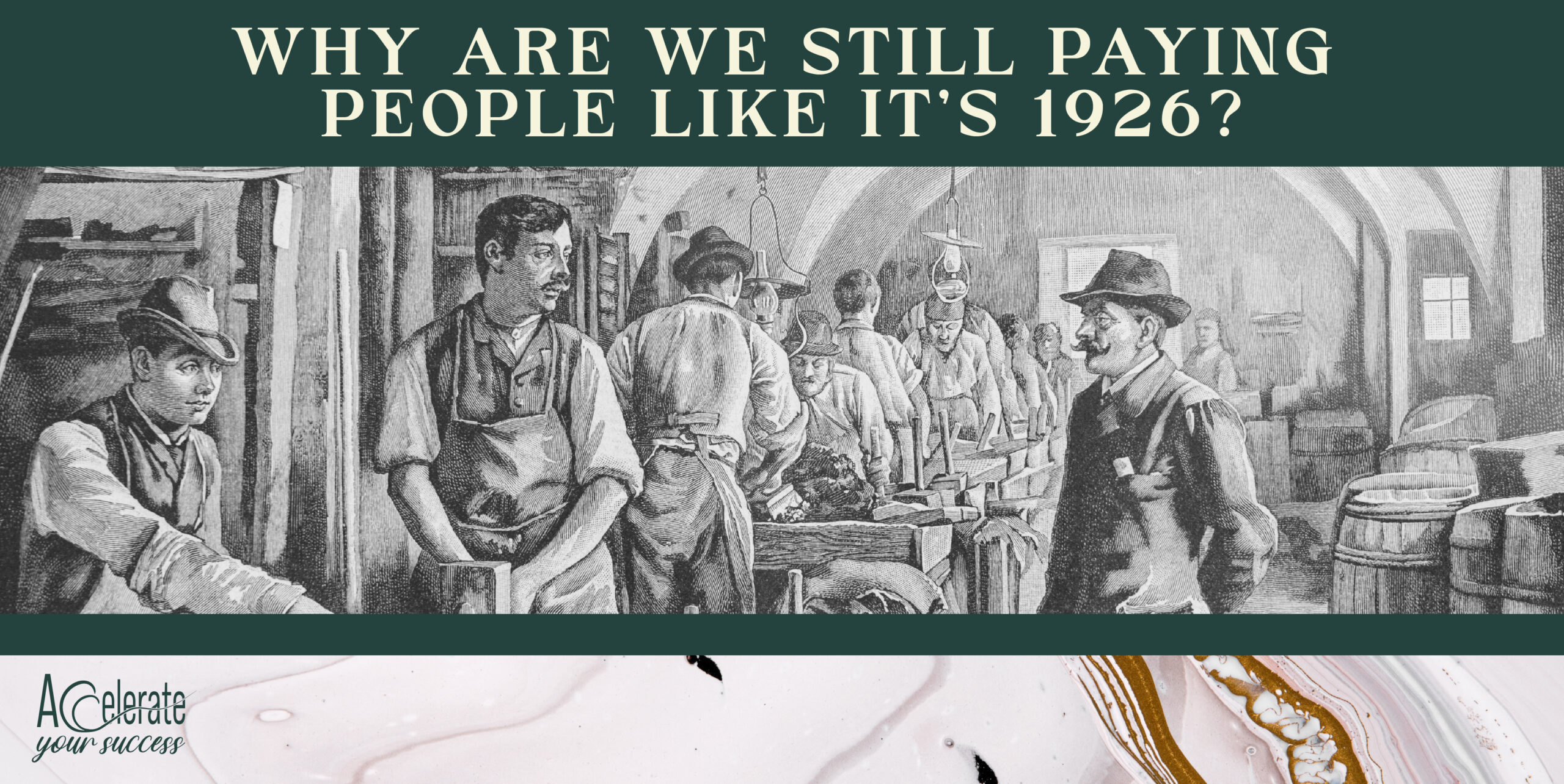
Factories introduced an entirely different challenge. Expensive equipment had to run on schedule. Production lines depended on people being in the right place at the right time. Employers didn’t just need the work completed; they needed workers physically present.
Suddenly, time became something worth measuring.
Hourly pay wasn’t invented because someone proved it was the best way to compensate every employee. It was created because factories needed people in the building the entire time the line was running.
Many businesses still operate that way today. Retail stores have to open at a certain time. Restaurants need cooks during the lunch rush. Receptionists can’t answer phones if they’re working from home at midnight. In those situations, paying for someone’s time is still a practical solution because being present is part of the job.
But not every business works that way.
The Nature of Work Has Changed
Today, many employees spend their days solving problems, writing code, designing websites, managing projects, creating marketing campaigns, or analyzing data.
For many of these roles, the value isn’t created by sitting in a particular chair for eight hours. It’s created by producing good work.
That’s one reason we’ve seen more companies experiment with remote work, flexible schedules, compressed workweeks, and other approaches that would have been impossible in a factory environment.
The work changed. The question is whether the compensation system changed with it.
Compensation Is More Than a Paycheck
When most business owners think about compensation, they think about wages.
But employees experience compensation much more broadly. Think about some of these “perks”:
- A predictable schedule.
- Working in an air-conditioned building—especially when the Mississippi heat index climbs over 100 degrees.
- Not having to work nights or weekends.
- Paid training.
- Promoting from within.
- Health insurance.
- Retirement plans.
- Paid time off.
- Flexibility.
Two companies may offer exactly the same hourly wage while providing completely different overall compensation. One expects employees to work every weekend with little flexibility. The other offers regular schedules, ongoing training, and a workplace where people enjoy coming to work.
The paycheck may be identical. The compensation is not.
Stop Asking Which Pay System Is Best
A better question is this ‘What are you trying to accomplish?’
Every compensation system was created to encourage certain behaviors.
- Hourly pay encourages availability.
- Salary encourages ownership and responsibility.
- Commission encourages selling.
- Performance incentives encourage specific results.
None of those systems is universally right or universally wrong. Each one fits some situations better than others. The mistake many business owners make is assuming they have to choose the same compensation system everyone else uses.
The businesses that attract and retain great employees often think differently. They don’t start by asking, “Should we pay hourly or salary?”
They start by asking, “What kind of workplace are we trying to build, and what compensation system will support it?”
That’s a very different conversation.
Next week, we’ll look at the most common compensation models, what each one rewards, and the advantages and disadvantages of each.